Our Method for Checking an ETH Deposit in Full
Every statement on ETH Casino Canada comes out of this method. We open the regulator's own standard, search the licence register of whichever authority an operator names, read that operator's published terms and payment pages end to end, and quote nothing a reader cannot open for themselves. The regulated Ontario market answers the first question in one line, three registers answer the second, eight operators answer or decline to answer the third, and the Ethereum network answers the fourth, measured here rather than read off a gas tracker. This page walks through the process, including its four limits.
- Where a check starts
- The regulator's published standard, every time
- Registers searched
- Three: Anjouan, Curacao, Kahnawake
- Operators read in full
- Eight, by name, terms and payment pages
- Scoring scale
- 16 criteria in three groups, each scored 10, 5 or 0
- Known limits
- 4, each printed on the page it affects
- Audience
- Adults aged 18 or over, and 19 in Ontario
Table of contents
The Regulator Standard Comes First
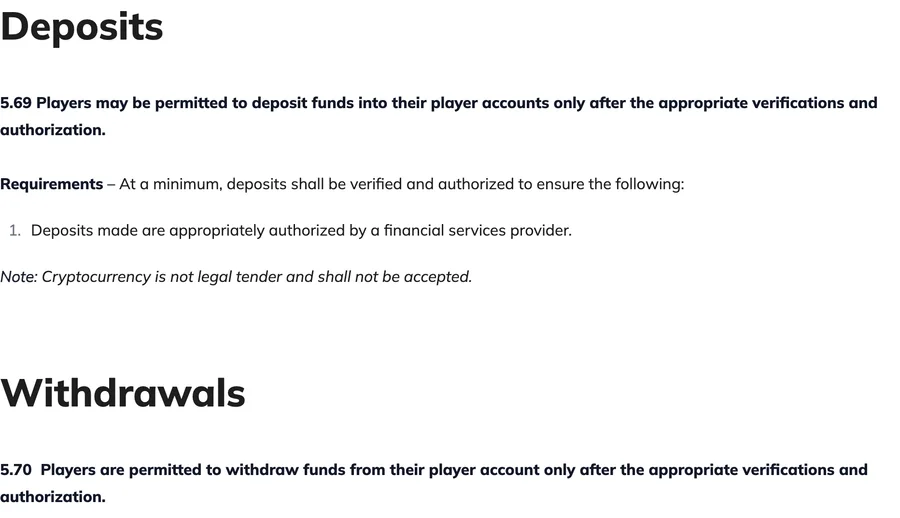
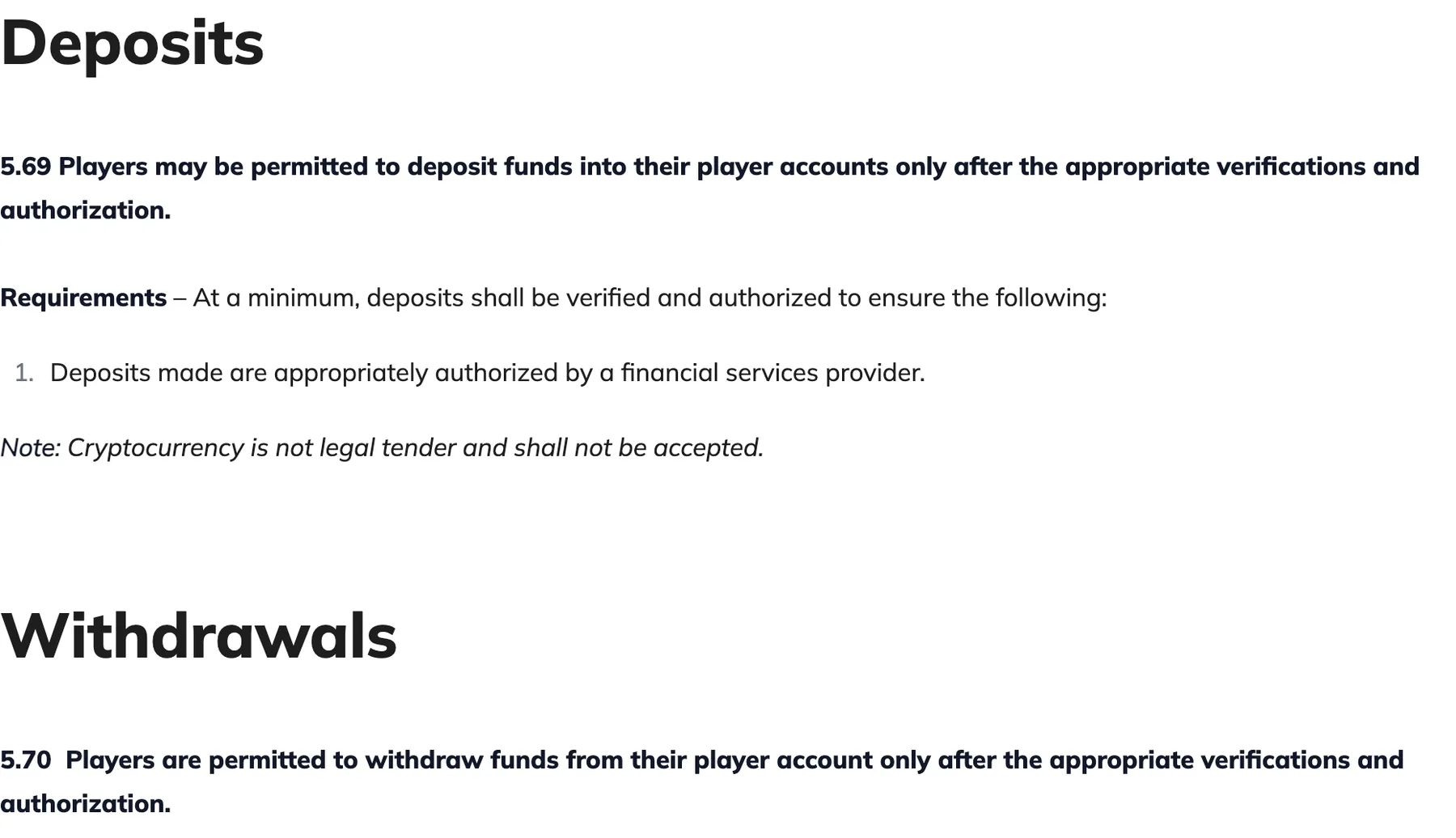
The standard comes before every other step, so a check starts on the regulator's own site instead of in a casino cashier. The deposits section of the Registrar's Standards for Internet Gaming carries a note under Standard 5.69 reading that cryptocurrency is not legal tender and shall not be accepted.
The wording matters as much as the rule. It is a note attached to a deposits standard, not a separate rule about crypto casinos, and every page here names the screen that printed it rather than writing the regulations say so.
That single line settles the question the whole site turns on, and it settles it by definition rather than by suspicion: an operator taking ETH from a player in Canada is operating outside the regulated Ontario market, because the regulated market may not take it. Nothing in that sentence is an accusation, and a reader can confirm it in under a minute.
In Short, Before You Trust Anything Here
Here's what a statement on this site is worth: it's a published document plus the date we read it, and nothing else. We've opened no account and deposited nothing anywhere, and you'll see that limit repeated wherever it matters.
That limit is deliberate, and it is stated on every page it touches. Reading terms cannot measure what an operator does at payout time, so this method speaks to paperwork, licensing and sourcing, while the one figure we measured ourselves describes the network rather than any casino on it.
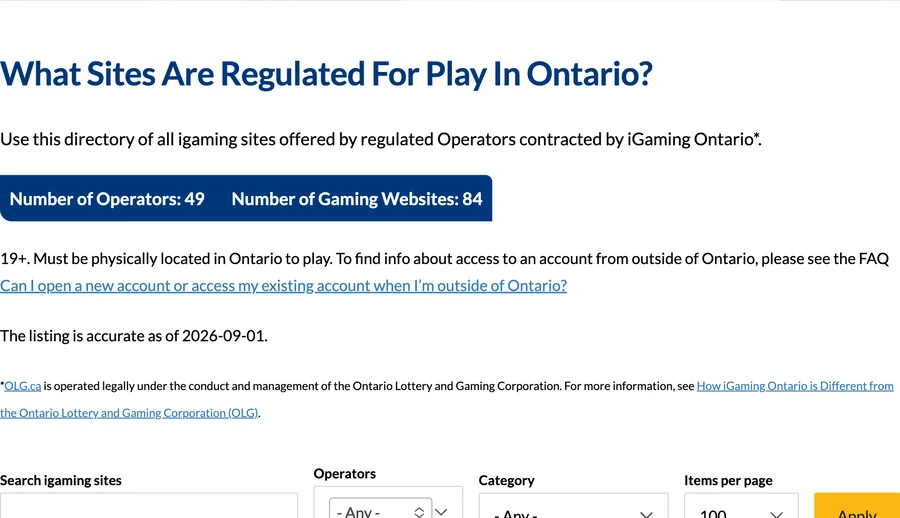
What the provincial directory of regulated sites adds is narrow and worth stating narrowly. It counts 49 operators and 84 gaming websites, it dates itself accurate as of , and it publishes no payment methods at all, so it can only show who is absent. The page on the legal position in Canada sets the two documents out side by side.
What Should a Reader Check Before You Start?
Four checks are worth making before you weigh anything here, and each one is free. Read the deposits note first, then take a licence number out of a footer and search for it.
- Open the deposits section of the Ontario standards and read the note under Standard 5.69 in full.
- Search the provincial directory of regulated sites for the brand you had in mind.
- Search the register of the authority named in that brand's footer, using the number exactly as printed.
- If the search comes back empty, change one character and try again, because that is how one of these eight was found.
Those are the same four steps behind the dossiers here, so a reader needs minutes and no account at all. Doing them in advance is the fastest way to test this method instead of trusting it, and every page here carries the date of its own last check.
What Reading Terms Cannot Show
Reading terms has a ceiling, and this is the honest shape of it. A published clause records a commitment; it does not record behaviour, so nothing here reports what any of the eight operators did with a real withdrawal request.
The second half of that ceiling is geography. Our browser left the public internet from Belgrade, and a refusal page we met printed the location it had detected, which was Serbia. No observation of that kind proves anything about a player in Ontario or Quebec, so every statement here about who may register comes from the restricted-territory clause in the operator's own terms and from nowhere else.
One finding from that reading is worth printing on its own, and it is an absence. Across all eight operators, not one publishes how many confirmations it waits for before a deposit is credited, and that is the number which decides whether a player waits a minute or an hour. Players look for it anyway: one search asking whether a named casino's Ethereum deposit runs on BNB Smart Chain draws 50 searches a month on its own, which is a question about the network nobody answers on the page where it matters.
Why a Round Is Not Called Proven Fair
This is where the method runs out of road, and saying so is more useful than dressing it up. A page explaining an algorithm and a verifier a player can actually run are two different things, and only the first of them was confirmed here.
Five of the eight publish a provable-fairness page, and not one of them gave us a field where a round's seeds could go; the 17 inputs we first counted on the closest-looking page turned out to be a language switcher. Not one round was ever re-computed for this site, so no page here says a game was proven fair; what the pages say is which operators publish the scheme, and that running it is work the reader would still have to do. The reference page on provable fairness keeps those two claims apart line by line.
What a Reader Is Left With
What is left is a published explanation a reader takes on trust, which is weaker than a check they ran themselves. The gap gets printed as a gap rather than smoothed over.
So the two claims appear side by side instead of merged, and the checks we can actually run take their place. The standard, the registers, the terms and the chain itself are all open to anyone, and every one of them is repeatable in an afternoon.
Sourced Numbers Quoted as Printed
The method below is written for a player in Canada, and that choice decides which register answers and which stays silent. Every figure is sourced before it is printed, and the date of its reading travels with it. Licence details, minimums, fees and identity-check rules come only from a regulator page, a register row or the operator's own published terms, and each keeps the shape it was given.
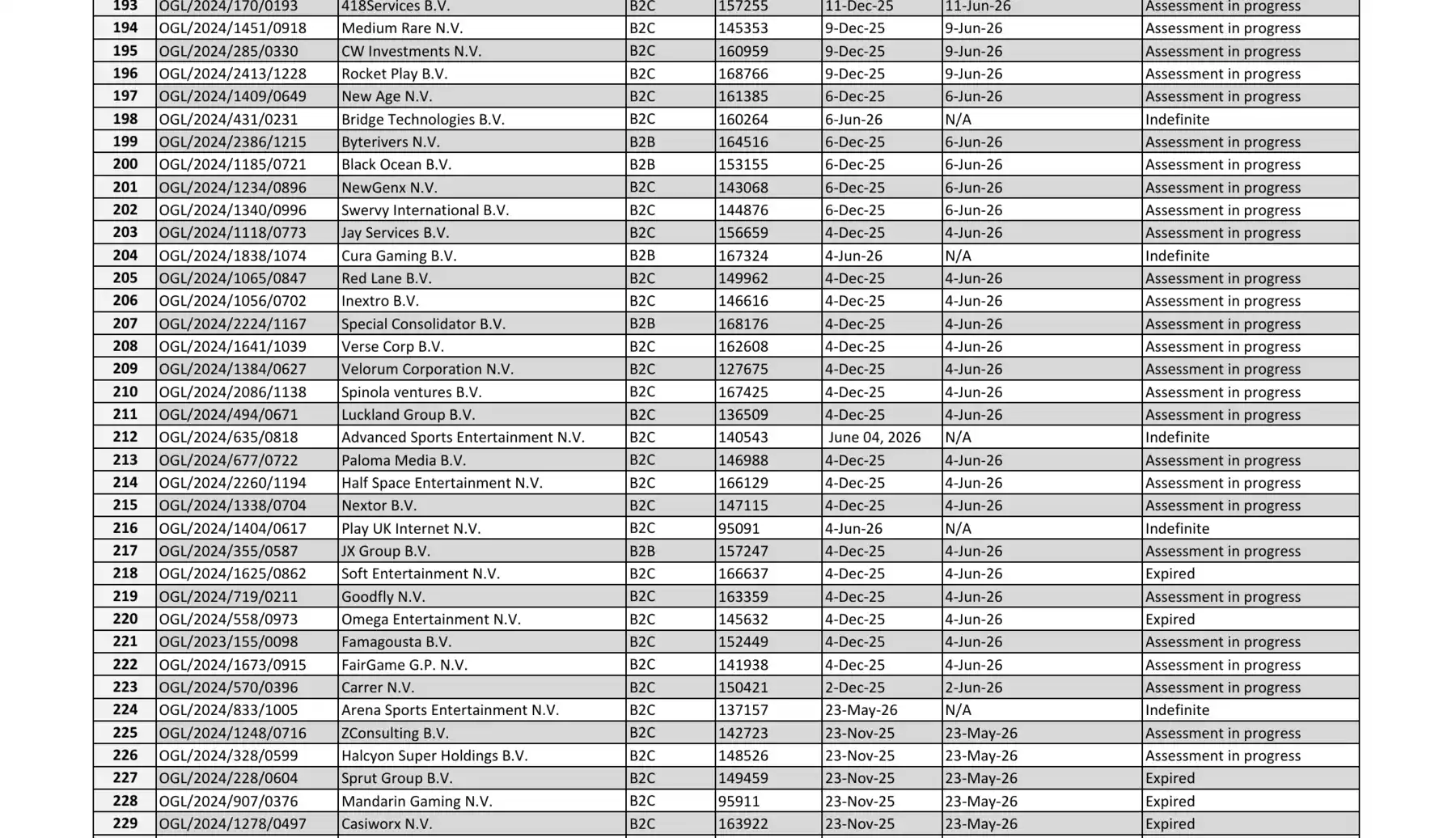
A register status is the sharpest case of that rule. Two of the eight carry the words Assessment in progress with an expiry date already in the past, and the authority's register page warns that its overviews do not guarantee current validity, so the pages here quote those three words exactly and never translate them into expired. The translation would be a conclusion the register declines to draw.
The same rule governs anything the operator leaves open. A clause reading at our sole discretion is recorded as a right the operator keeps, not as a published condition, and our scoring treats it as half a mark for exactly that reason. We invent no minimums, fees, confirmation counts or identity thresholds, and the reference page on fees is the model for this rule.
Honest Cons from the Documents
Every page names its downsides. Cons are mandatory on every page that carries a judgement. A reading round that comes back with only good news was never a reading, so the drawbacks are written before the conclusion.
Every page carrying a judgement includes a real downsides section and, where it applies, a named alternative the editors would pick instead.
The drawbacks stay specific: a licence number printed with one character wrong in a footer three times over, an issue date that does not match the register row behind it, an operating company written with the wrong corporate ending, a confirmation count nobody publishes, a fee table whose own figures moved between two readings on the same day, and a Canadian regulator's permit list unrevised since September 2023. We also name who should stay away, and that warning sits before the sponsored button instead of after it.
Scoring: 16 Criteria in 3 Groups
An operator dossier rests on 16 criteria in three groups, and each criterion is scored 10, 5 or 0. The groups are Trust, which covers the licence and the company behind it; Chain, which covers what the operator publishes about the deposit itself; and Money, which covers withdrawals, identity checks, bonus conditions and whether Canada is addressed by name at all.
The middle value is the one that carries the argument. A score of 5 means the operator does not publish it, which is neither a pass nor a failure of conduct, and in the Chain group every one of these eight earns it on the confirmations line, because not one of them publishes the count. What a number here cannot mean is that a casino is safe, generous or quick to pay: it measures how much of its own paperwork the operator puts in front of a reader before an account exists.
| Group | What it weighs | Evidence accepted |
|---|---|---|
| Trust | Licence status in the register, whether the printed details match it, whether a number is given at all, the operating company and its number, and a published restricted-territory clause | A register row and the operator's own terms |
| Chain | Native ETH rather than tokens only, the deposit networks named, the confirmations stated, the withdrawal fee published, and a verifier that actually runs | The operator's payment and help pages |
| Money | Withdrawal minimum and timing, the event that triggers an identity check, a published threshold, bonus wagering and expiry, and Canada addressed by name | Published terms, clause by clause |
What the Registers and the Terms Provide
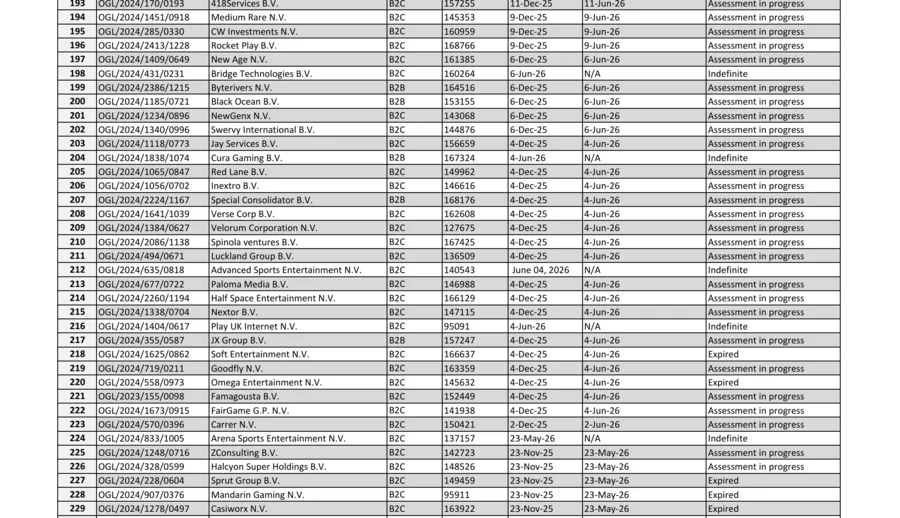
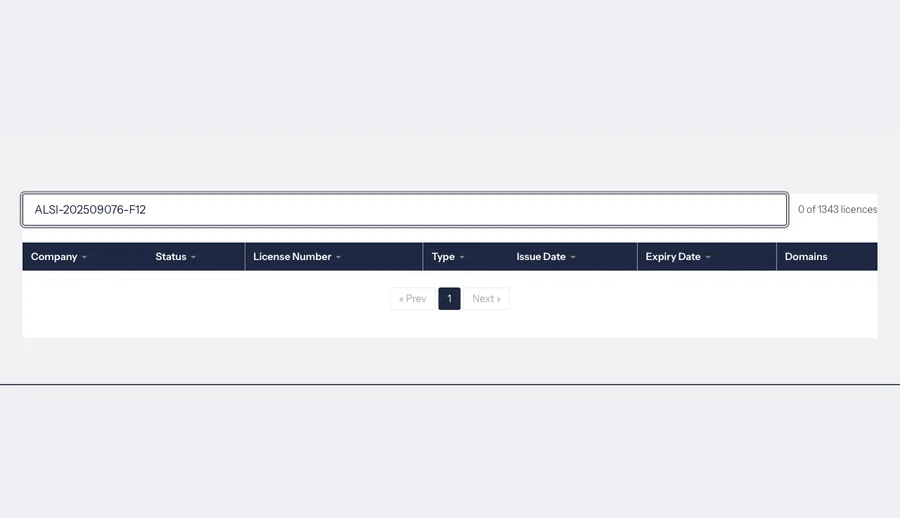
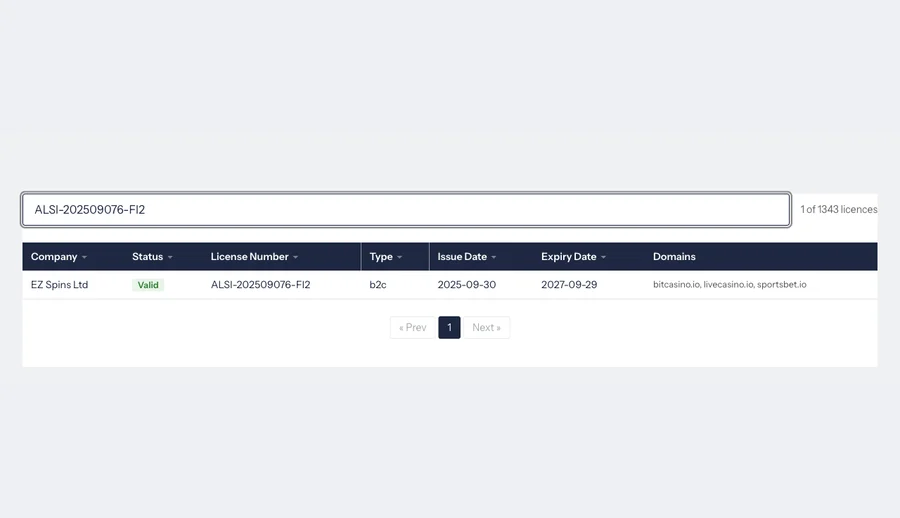
The registers supply the licence half of the picture, and on these eight they supply it by answering. Anjouan publishes a search over 1,343 licences that returns the holder, the status, both dates and the domains covered. Curacao publishes a file of 20 pages because its own portal is offline, and that file is where a status appears in words. Kahnawake publishes 234 rows resolving to 55 holders, and not one of the eight is among them.
The terms supply everything else, and what they withhold is the finding. Across the eight, the networks a deposit may travel over are named once, a withdrawal fee and minimum are printed once, the event that triggers an identity check is named once in a form a reader can rely on, and a confirmation count is named never. A threshold described as one we set from time to time is recorded as not published, because that is what it is.
Canada itself appears unevenly. One operator names Alberta and Ontario in its prohibited-jurisdictions clause while never writing Canada; another never mentions the country in its general restricted list but names it in three game-level exceptions; a third publishes no territory list at all in what we read. Each of those is reported for that operator alone.
Which Criteria Decide a Dossier?
The criteria are fixed before an operator is opened, and they stay fixed whatever the reading turns out to be. To verify a claim, the editors go back to the document that carries it, then quote the wording they find there rather than their impression of it.
Every page includes the source beside the figure it carries. Readers can follow the same trail, so they can open a register themselves, and you can disagree with a dossier while still trusting the rows under it.
Which Lines the Player Never Sees
Some figures exist and are published; others exist and are withheld; a third set does not exist in public at all. The table keeps the three apart, because the difference is the whole story.
| What a player wants to know | Who could answer it | What a reader actually gets |
|---|---|---|
| Whether the regulated market takes ETH | The provincial regulator | Answered outright: a note under Standard 5.69 in the deposits section |
| Whether a licence number is real | The authority named in the footer | Answered by searching the register, and three of the eight print a detail that does not match |
| How many confirmations before credit | The operator | Nothing: not one of the eight publishes the number |
| What the transfer itself costs | The Ethereum network | Measured here over 30 days of hourly blocks, and reported as the cost of the network rather than of a deposit |
What Else the Terms State Outright
Four further fields come off the operators' own pages, copied exactly as published, and two of them record a withheld answer rather than a missing reading. Nothing in the table is inferred from a directory.
| Field | What the published terms say |
|---|---|
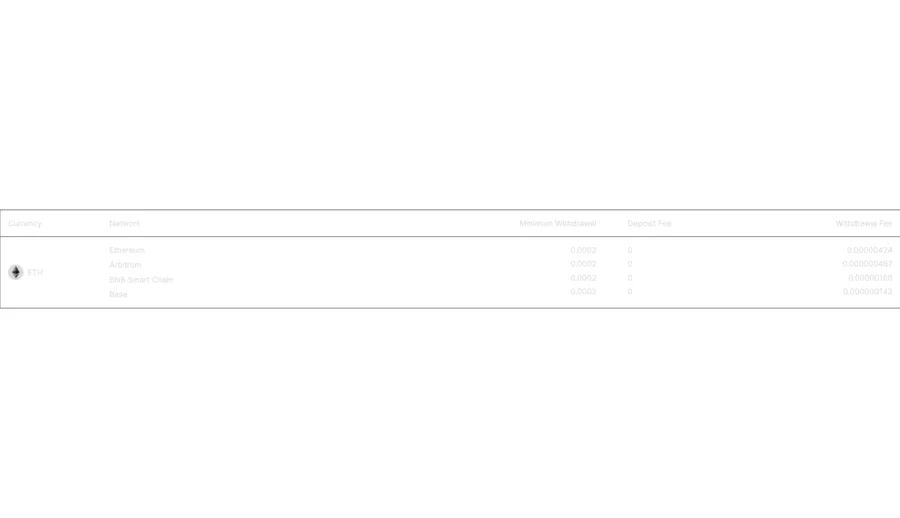
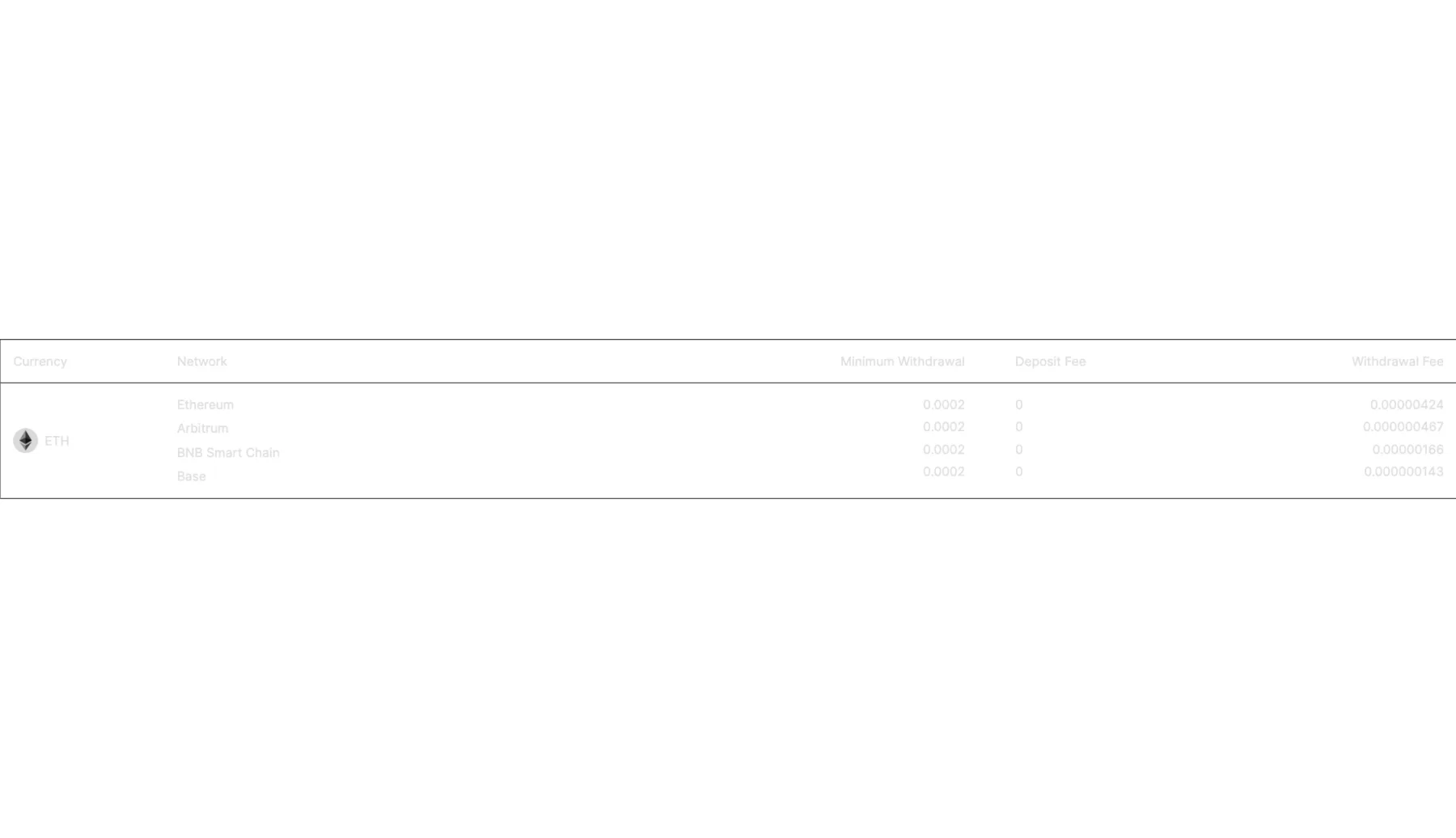
| Deposit networks | Named by one of the eight: Ethereum, Arbitrum, BNB Smart Chain and Base. Another states ERC-20 only, with other protocols not supported |
| Withdrawal minimum and fee | Printed by one of the eight per network, with a minimum of 0.0002 ETH and no deposit fee charged |
| Identity-check trigger | Named plainly by one operator, in any event before a first withdrawal; elsewhere reserved to the operator's own timing |
| Restricted territories | Published by most of the eight as a list; one names Alberta and Ontario outright, and one publishes no list at all in what we read |
Which Operators Get a Page of Their Own
Eight operators were read and four of them get a page. That is a decision about publishing rather than about reading: all eight dossiers exist with their register rows, their clause numbers and their dates, and the four that became pages are the ones carrying a finding a reader can repeat, such as a licence number printed with one character wrong or the only fee table of the eight. The other four stay dossiers, because a page written to round out a list would thin the site rather than fill it.
The checklist below is what a page like that has to carry. It is printed here so a reader can see the bar. A claim resting on an affiliate directory stays out, nothing is reported about an operator beyond what its own published pages state, and a field the operator does not publish gets a recorded absence rather than a plausible number.
How a Licence Claim Is Confirmed
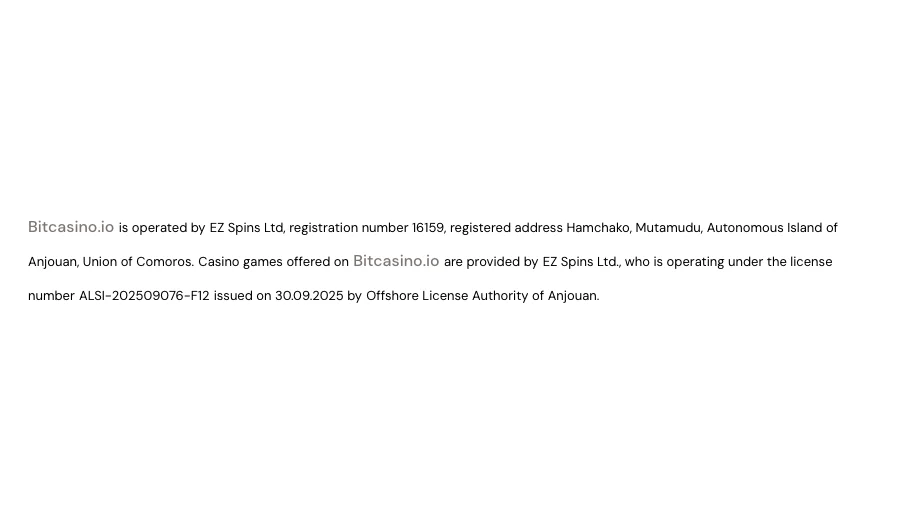
Regulation is confirmed by register instead of by badge, and on these eight the registers answered every time. The method was run twice on one number to prove the point: searched exactly as the operator prints it, the register returned nothing out of 1,343 licences, and with a single character corrected it returned one valid entry, held by EZ Spins Ltd and covering three domains at once.
One category error is worth heading off, because it is common and it is wrong. A directory of regulated operators is not a register of payment methods, and a provincial list that never mentions crypto proves only who is on it. Any page claiming the directory shows that registered operators refuse crypto is describing a document that does not say so; the deposits standard is what says so.
- The licence number as printed, and the register row it resolves to, read on the test date.
- The operating company and its registration number, taken from the terms and matched against the register.
- The restricted-territory clause, quoted by clause number rather than summarised.
- Deposit networks, minimums, fees and the confirmation count, each recorded as published or not published.
- The event that triggers an identity check, and any threshold, in the operator's own words.
Every page here says not published wherever nobody prints a figure at all, and not confirmed wherever one resisted verification. That wording is deliberate, because a gap a reader can see beats a number nobody can trace.
Terms This Method Uses
- Deposits standard
- The part of a regulator's published standards that governs how money may enter a player account, and where the Ontario note on cryptocurrency sits.
- Register row
- A single line in a licence register, carrying the holder, the number, the type, both dates and a status in the register's own words.
- Assessment in progress
- A status one register prints beside a licence whose expiry date has passed, quoted here word for word because the register declines to call it anything else.
- Discretion clause
- A term reserving a decision to the operator, scored as half a mark because it is a right rather than a condition a reader can rely on.
What the Record Actually Holds
The record is a folder of documents read on a named day, never an account. A register row only means something beside the footer it was checked against, which is exactly why the pages print both.
| Part of the record | Date | What it holds |
|---|---|---|
| Regulator standards and the provincial directory | The deposits note under Standard 5.69, and a directory counting 49 operators and 84 gaming websites | |
| Three licence registers | 12 and | A search over 1,343 licences, a downloaded file of 20 pages, and a permit list of 234 rows |
| Eight operators' terms and payment pages | Every field recorded as published, not published, or left to the operator's discretion |
4 Types of Limit, Compared
The complete list of limits runs to four entries, and each one shapes every judgement here. Readers who weigh a dossier should read them first.
| Limit | Why it exists | What happens instead |
|---|---|---|
| No account anywhere | Nothing was deposited or withdrawn at any of the eight operators | Nothing here reports a balance, a payout or a support reply |
| No Canadian vantage point | The browser behind this work left the internet from Belgrade | Access is reported only as the operator's own territory clause states it |
| No round re-computed | No provable-fairness verifier was run end to end | A published scheme is reported as published, never as proven |
| Network cost is not deposit cost | What an operator adds on top of a transfer is published by one of the eight | A chain figure is labelled as the network's and never presented as what a deposit costs |
Does a Published Clause Prove Anything?
A published clause proves a commitment and stops there; what an operator does at payout time comes out of behaviour nobody here observed. That is why a dossier grades disclosure rather than service.
Readers can repeat any of it themselves in a few minutes. They will meet the same standard, the same register rows and the same clauses these dossiers record.
Recap: The 4 Limits of This Method
Four limits shape this method, and the page names each out loud. No account was opened anywhere, so nothing here describes a deposit or a withdrawal as it happened. The browser was not in Canada, so access is reported only from the territory clause. No fairness verifier was run, so a scheme is reported rather than proven. And the figure we measured on the network is the network's own cost, not what a deposit costs once an operator has taken its share.
Everything else on this page recaps in a sentence or two. The regulator standard comes first, the geography gap is named rather than papered over, sourced figures are quoted as printed, cons sit beside the judgement, a dossier rests on 16 criteria in three groups where the middle value means the operator does not publish it, and a licence is looked up by number rather than taken off a footer. All of it is done by the tester who signs each page, and nothing published here is meant for anyone under 18.
This site takes no deposits and runs no identity checks; both stay off it entirely.
Related Reading
More on this subject, from the same section first: