Owen Lachance, Crypto Payments Tester and Editor
The tester behind these pages, Owen Lachance, reads and signs every one of them on ETH Casino Canada, and the subject here is a payment method rather than a product with a specification sheet. That changes where a fact comes from: a regulator standard, a licence register searched by number, the published terms of a named operator, and the Ethereum network itself. This profile sets out that method, what stands behind the byline, the full index of signed pages, and how to reach the editors.
Table of contents
About This Tester and the Byline
The byline is a role, not a resume. The byline on ETH Casino Canada belongs to a narrow role. Read the regulator's own standard, search the register for the licence number an operator prints, read that operator's terms end to end, and report only what one of those documents actually states. Reads a payment method the way a register reads a licence, and prints only what a regulator, a register or a named operator has already published: starts at the regulator's own deposits standard to see what may fund an account on a regulated market, copies the licence number out of an operator's footer and searches for it in the register of the authority named beside it, reads that operator's terms and payment pages clause by clause and records every minimum, fee, confirmation count and identity-check trigger as published, not published or left to the operator's own discretion, and measures what a transfer costs straight off public Ethereum endpoints rather than quoting a gas tracker.
Every page here is written, checked and signed by the same person. Corrections reach Owen Lachance directly at [email protected]: send the sentence you dispute with the document that contradicts it, and the reply comes from whoever wrote the line rather than from a support queue. A page that changes keeps its update date, and the correction is named in it.
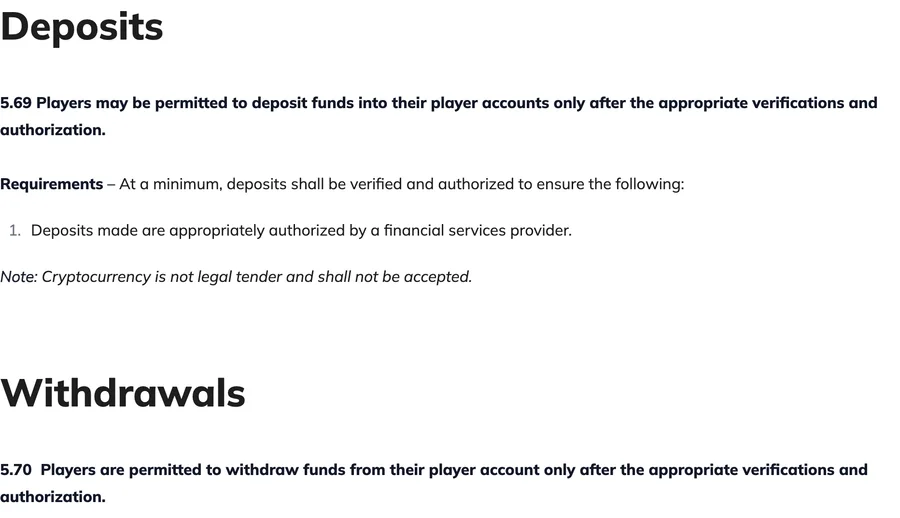
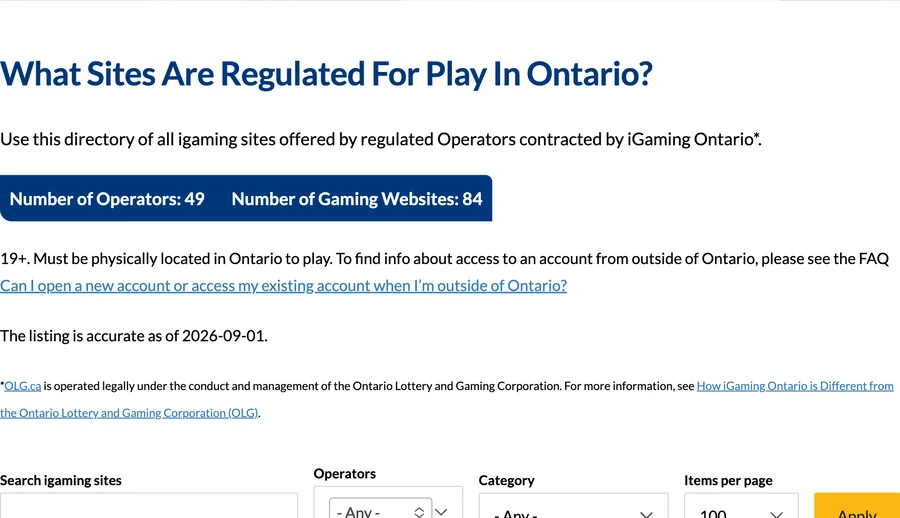
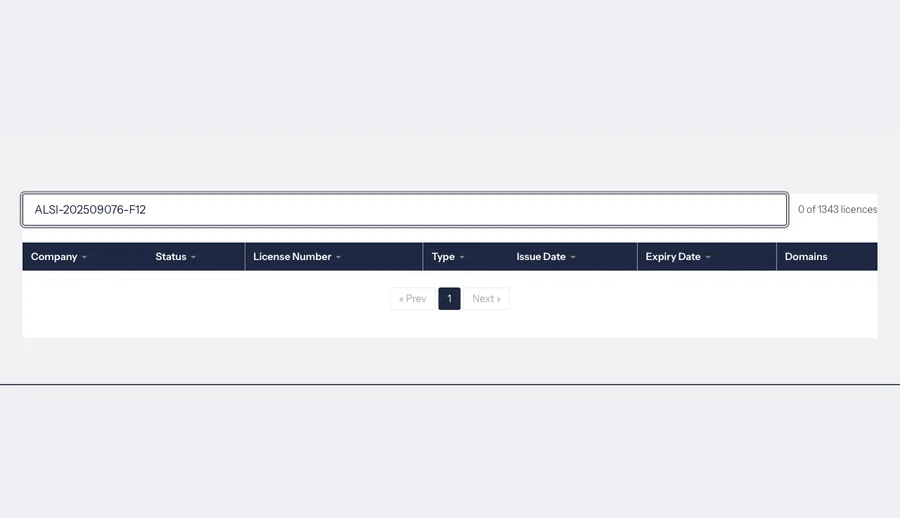
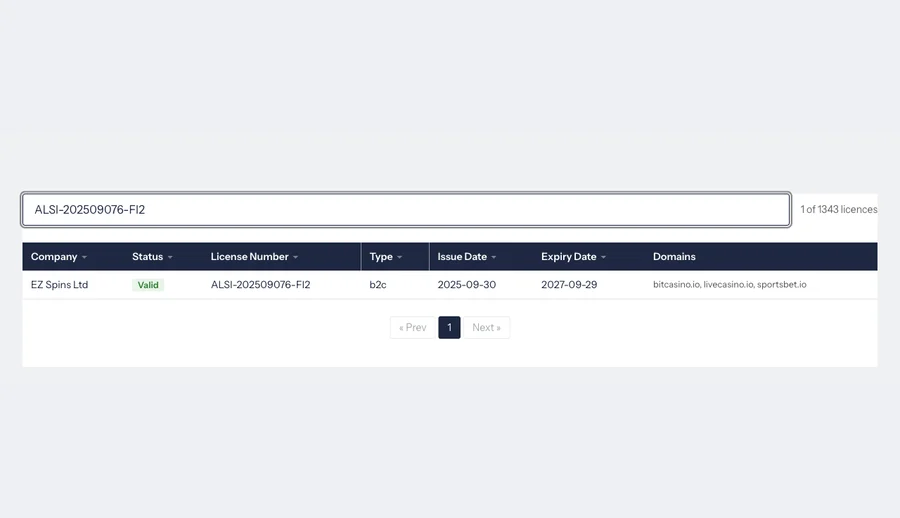
What sits behind the byline is a record with dates, which is a different thing from a title. On the deposits section of the Registrar's Standards for Internet Gaming was read on the regulator's own site and saved to disk, all 400,778 bytes of it, because the sentence this whole site turns on is a note printed there under Standard 5.69. The iGaming Ontario directory of regulated sites was saved the same day along with a list of the brands in it. The Anjouan Gaming Authority register was searched twice over by hand, once for the licence number exactly as an operator prints it in its footer and once for the same number with a single character changed, and the two searches returned different answers. The Curacao register was downloaded as a file of 20 pages dated , because the authority's own search portal is switched off. The Kahnawake permit list was pulled into a table of 234 rows and counted down to 55 distinct holders. The published terms and payment pages of eight named operators were read in full, field by field, and every field was recorded as published, not published, or left to the operator's discretion. Seven captures of those screens sit in the project folder, so a figure here can be re-read rather than recalled. The network measurement was run the same week, straight off public Ethereum endpoints, and its outputs sit in the same folder as the scripts that produced them.
What this byline does not claim is as short as what it does. No degree, no certification, no employer in the gambling industry: the qualification on offer is the record above, and a reader who doubts it can repeat every step in an afternoon. No account was opened and no money was deposited at any of the eight operators, so nothing here reports a balance, a payout or a support reply. No round at any operator was re-computed, so nothing here is called proven fair. And the browser used for this work left the public internet from Belgrade, which is the honest reason no page here claims to have tested whether a site lets a Canadian in.
In Short, What the Tester Signs
Here's the deal on this profile: it's a method, not a resume. Every figure on all 15 signed pages is printed beside the document it came from, and the schema names a role because a role is what can be verified today.
If a number isn't printed by a regulator, a register or a named operator, the page says not published and moves on. That's the whole promise, so the sections below simply show it working.
- Role
- Crypto Payments Tester
- Focus
- One payment method, its paperwork and the networks it travels over
- Method
- Regulator standard first, register searched by number, operator terms read in full
- Scoring
- 16 criteria in three groups, each scored 10, 5 or 0
- Writing since
- Contact
- Editorial contact page
What Should You Check Before You Start?
Four checks are worth making before you start, and every one of them is free and takes minutes. Open the regulator's standard first, then hold an operator's footer against the register of the authority it names.
- Open the deposits section of the Ontario standards and read the note printed under Standard 5.69.
- Open the provincial directory of regulated sites and search it for the casino you had in mind.
- Copy the licence number out of that casino's footer and search the register of the authority named beside it.
- Read the restricted-territory clause in its terms, which is the only place the operator itself addresses where you live.
Those four are the same checks behind every page here, which is why they are printed as instructions rather than conclusions. Doing them in advance turns the rest of this profile into a cross-check instead of a claim, and every page here carries the date of its own last edit.
How This Tester Reads a Payment Method
Work starts at the regulator rather than at the casino, because the regulated market answers the first question outright. The deposits section of the Registrar's Standards for Internet Gaming carries a note under Standard 5.69 reading that cryptocurrency is not legal tender and shall not be accepted, and that one line decides what any ETH deposit from Canada actually is.
The provincial directory of regulated sites comes next, and it is useful for exactly one thing. It counts 49 operators and 84 gaming websites, it dates itself accurate as of , and it names no payment method at all, so it can show that an operator is absent from the regulated market and nothing more than that. The ban itself belongs to the standard.
Only then do the operators get read, eight of them by name, terms and payment pages end to end. Each field goes into a dossier as published, not published, or left to the operator's discretion, and that last category matters: a clause reading at our sole discretion is a right the operator keeps, not a rule a player can read in advance. The full procedure sits on the testing method page, which every page links from its byline.
The one measurement that belongs to this site rather than to a document is the network itself: what a transfer on Ethereum actually costs. That one was taken here rather than copied from a gas tracker, over the 30 days to , by reading one block an hour for 720 hours and every transaction receipt inside each of them, which came to 185,167 transactions and 54,083 plain ETH transfers. It runs on public endpoints with no key and no account, so a reader can repeat it, and it measures the cost of the network rather than the cost of a casino deposit, because what an operator adds on top is a separate figure most of the eight do not publish.
3 Kinds of Check, Compared in a Table
No source outranks the others on every question. Three kinds of document answer three different questions, and a page says which one it leaned on rather than blending them into a mood.
| Kind of check | What it settles |
|---|---|
| Regulator standard | Whether the regulated market in a province permits the deposit method at all, in the regulator's own wording. |
| Licence register | Whether the number an operator prints exists, who holds it, what status it carries and which domains it covers. |
| Operator terms | Whether a minimum, a fee, a confirmation count or an identity-check trigger is published, withheld, or left to discretion. |
Which Findings Survive to a Page?
A finding reaches a page only when a reader could reach it too. Either a document states it, or the page says plainly that nobody publishes it. There is no third category here, and no estimate stands in for a missing figure.
That rule is why the most repeated phrase on this site is an absence. Not one of the eight operators publishes how many network confirmations it waits for before crediting a deposit, and only one of them names the networks it will credit, so both of those live on the pages as gaps rather than as guesses.
What This Tester Covers, and Its Limits
This site covers one payment method and the paperwork around it. Coverage stays deliberately narrow, and against a general casino portal that is the whole point. The subject is depositing and withdrawing Ethereum from Canada: what the regulated market permits, which licences hold up when the number is searched, what eight operators publish about networks, minimums, fees and identity checks, and what the tax rules say about disposing of a crypto asset. Since 2026 that has produced 15 signed pages in 3 sections besides the front page.
The pages below run in reading order. Start with the ETH Casino Canada overview for the shape of the answer, then move to the page on what is legal in Canada for the standard behind it. The Alcohol and Gaming Commission of Ontario publishes the rule, the registers publish the licences, and the operators publish the rest or decline to, which is why the pages are built around the places where one of those three contradicts another.
- The deposits standard of the regulated Ontario market, read on the regulator's own site.
- Three licence registers, each searched by number rather than trusted from a badge.
- Eight operators' published terms and payment pages, recorded field by field.
- Four of those eight written up as pages of their own, because their dossiers carry the findings a reader can check.
- The federal tax and reporting rules that apply to a Canadian holding a crypto asset.
- Responsible gambling limits, warning signs and the provincial self-exclusion route.
The gaps in the public record are worth naming out loud, and several of them are real, so they are printed as problems instead of hidden.
Here is the shortlist to carry into any casino cashier. Nobody publishes a confirmation count. One Canadian regulator's permit list has not been revised since September 2023. One register answers only as a downloaded file because its own portal is off. And nothing here establishes whether a given site actually admits a player from your province, because the browser behind this work was not in Canada.
What Is Verified, and What Is Not?
The verified list starts with the licence numbers. Eight operators were read, each number was searched in the register of the authority the operator itself names, and all eight turned up. That is the opposite of the expected result and it is printed that way: these registers work, and they answer in minutes.
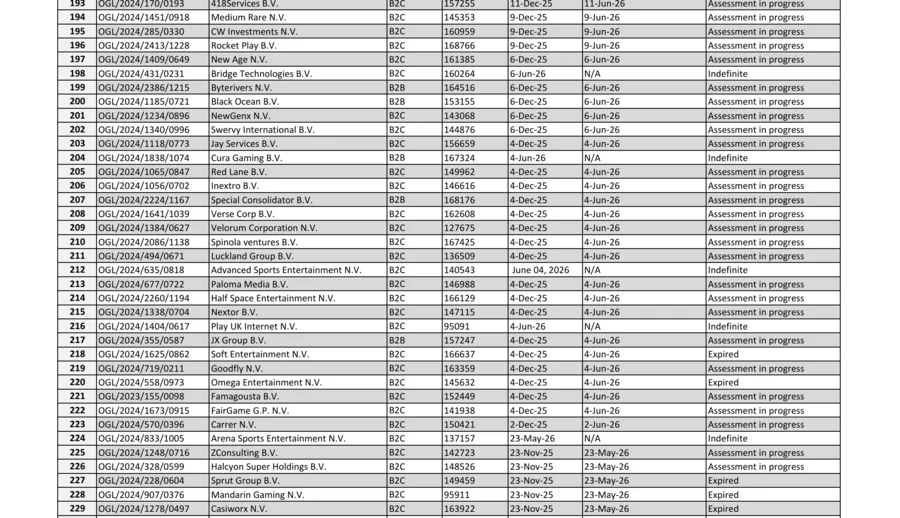
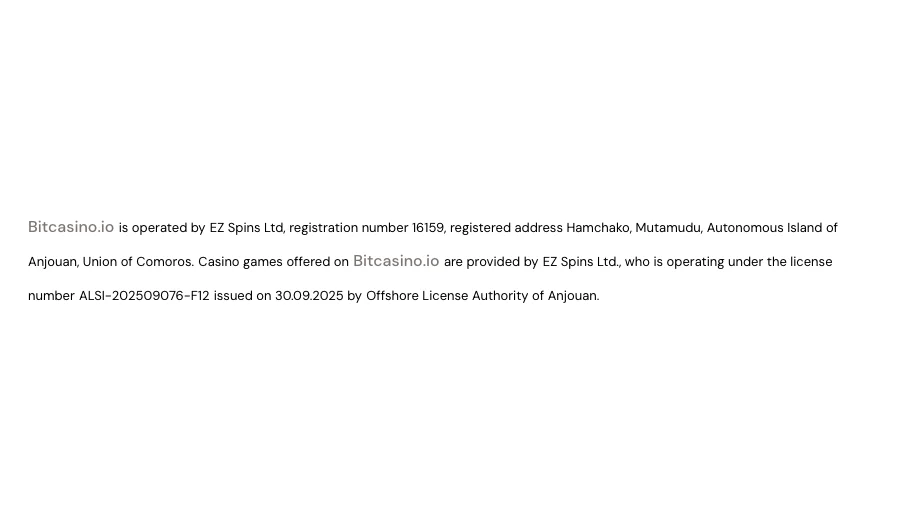
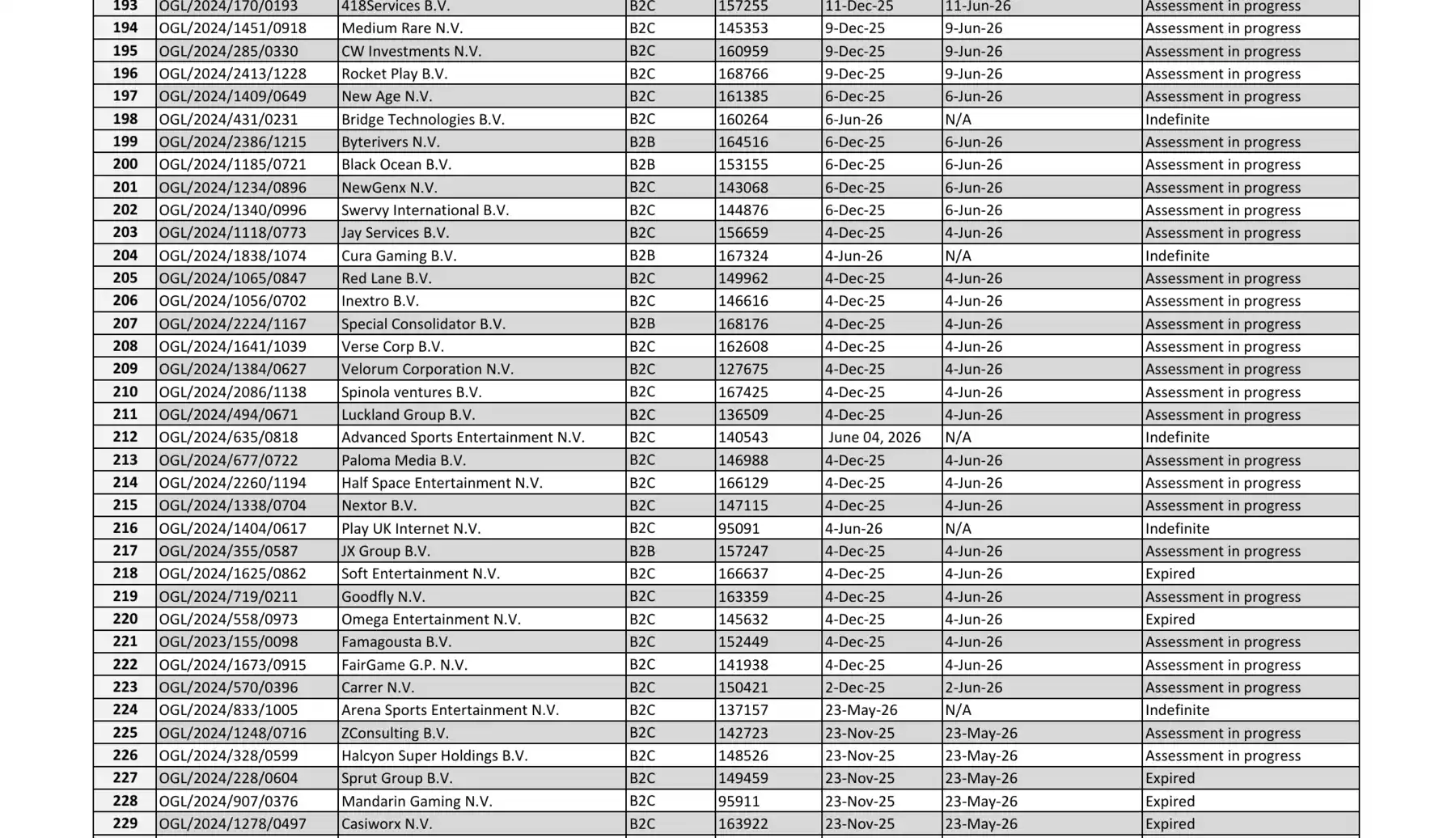
Three of the eight print details that the register does not match. One prints a number whose last three characters read F12 while the register holds FI2, so a player copying the footer finds nothing at all. One prints an issue date of against a register row dated 23-Nov-25. One names its operating company with a BV ending where the register writes NV
The limits are just as real. A status reading Assessment in progress is quoted word for word and never translated into expired, because the register prints that wording itself, and the authority's register page warns that its overviews do not guarantee current validity. Canadian accessibility is reported only as the operator terms state it. And the network figure is reported as a cost of the network and never as the cost of a deposit, because what an operator charges on top of it is a separate number that most of the eight decline to publish.
Pages This Tester Has Signed
The index below is generated from the database instead of typed by hand, so every content page appears in it with its section and the date of its last edit. A page therefore cannot quietly drop out of the list.
A page that was merely rebuilt keeps its old date, because a build is not an edit. However, a page re-checked against a changed operator clause gets a fresh date the same day, so you can tell one page from another at a glance.
Each page in the index carries its section beside it, and each links straight through to the work itself. A page edited this morning shows that date; a page merely rebuilt keeps the older one.
| Page | Section | Last edited |
|---|---|---|
| Ethereum Casino Canada Review: What Checks Out | Home | |
| How to Make an Ethereum Casino Deposit in 6 Steps | Guides | |
| Withdrawing Ethereum From a Casino in 6 Steps | Guides | |
| Crypto Casino No KYC: A Verification Guide for Canada | Guides | |
| Checklist: Verify a Provably Fair Casino (8 Checks) | Guides | |
| Stake Casino Canada: The Licence It Won't Print | Casinos | |
| Cloudbet Casino Canada: Fees Named, Countries Not | Casinos | |
| Bitcasino Canada: One Character Off the Register | Casinos | |
| Shuffle Casino Canada: KYC Before Your First Payout | Casinos | |
| 8 Ethereum Casinos and the Games They Name | Reference | |
| Ethereum Casino Fees Measured: CAD 0.0316 a Transfer | Reference | |
| Ethereum Casino Legal Canada: The Rules Explained | Reference | |
| Ethereum Casino Tax Canada: A Plain Guide to CRA Rules | Reference | |
| Ethereum vs Bitcoin Casino Deposits: 4 Routes Compared | Reference | |
| Best Crypto Casino Canada: 5 Ranked by Disclosure | Reference |
Every page above is one the tester has read end to end, and no page enters the list until its sources are checked. The date shown on each is the date of its own last edit.
Terms This Profile Uses
- Licence register
- The public list a gambling authority keeps, searchable by number or by company, where a licence claim is either confirmed or fails.
- Confirmation
- A block added to the Ethereum chain after the one holding a transfer, and the unit an operator counts before it credits a deposit.
- Discretion clause
- A term reserving a decision to the operator, which is a right it keeps rather than a condition a player can read in advance.
- Not published
- The label printed whenever no regulator standard, register entry or operator term states a figure the reader asked about.
Where an Operator Disagrees with Its Register
All eight licences were found. What differs is the detail printed beside them, so the table sets the two readings side by side instead of picking a winner. The register wording is the register's, not ours.
| Operator | What the site prints | What the register holds |
|---|---|---|
| Bitcasino.io | A licence number ending F12, printed three times over | The same number ending FI2, held by EZ Spins Ltd and covering three domains |
| Cloudbet | An issue date of | An issue date of 23-Nov-25 for Halcyon Super Holdings BV, status Assessment in progress |
| mBit Casino | Its operating company as Scores55 Tech BV | The same company written Scores55 Tech NV |
| Stake.com | No licence number at all, only a graphic mark | OGL/2024/1451/0918 for Medium Rare NV, found by its registration number 145353 |
The Registers on Record
Three registers were opened for this work, and they behave nothing like each other. Splitting them below separates what each one publishes from how a reader has to get at it.
| Register | What it returns | How a reader reaches it |
|---|---|---|
| Anjouan Gaming Authority | Holder, status, both dates and every domain a licence covers, across 1,343 licences | A search box on a public page, one number at a time |
| Curacao Gaming Authority | Licence number, company, type, registration number, dates and a status in words | A downloaded file of 20 pages, because the authority's own portal is offline |
| Kahnawake Gaming Commission | 234 rows of operator and address, resolving to 55 distinct holders, none of them among the eight read here | A published page, last revised in September 2023 |
What the Operators State for Themselves
The fields below come off the operators' own pages, copied as they appear. Two of the four rows record that nobody states anything at all, which is the finding rather than a gap in the reading.
| Field | What the eight operators publish |
|---|---|
| Network confirmations before credit | None of the eight publishes a number, and one of them describes the mechanism without ever naming the count |
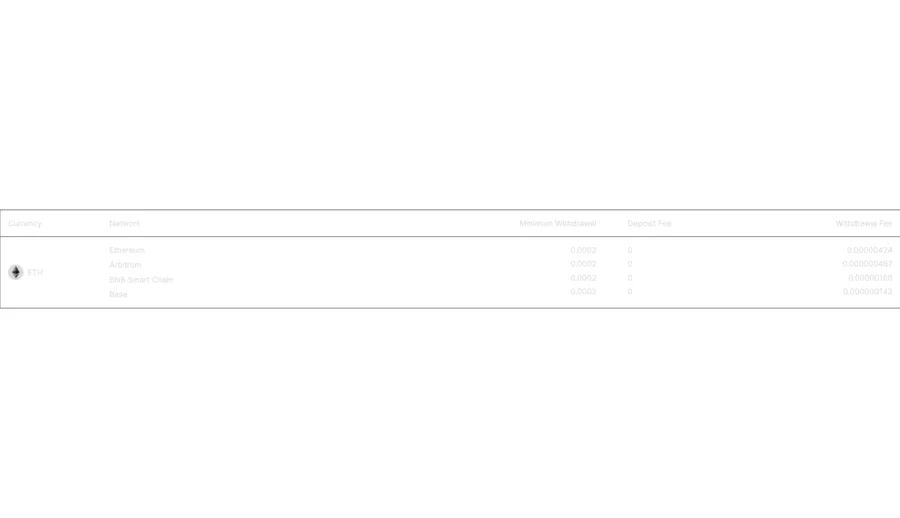
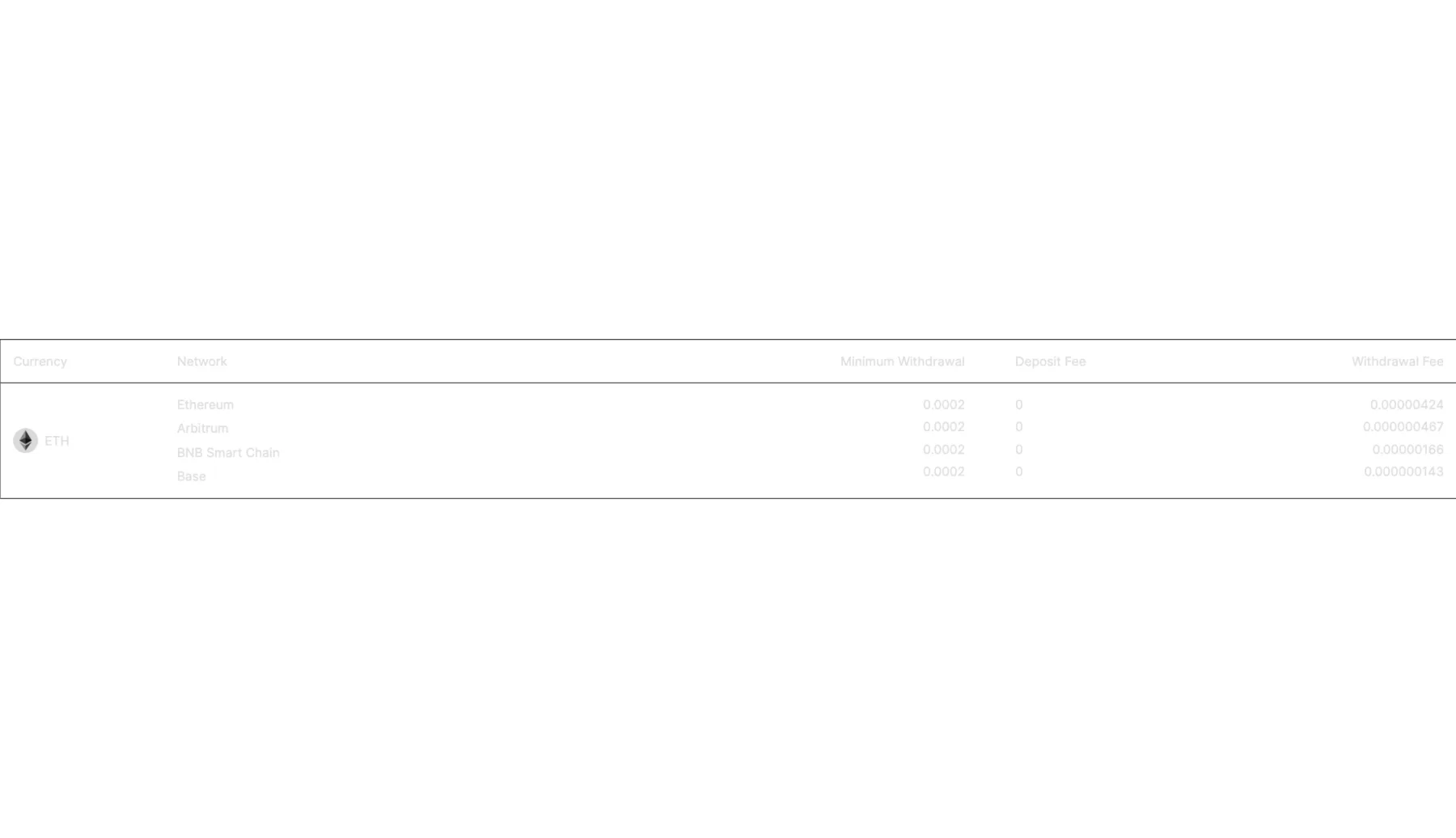
| Deposit networks accepted | One of the eight names them: Ethereum, Arbitrum, BNB Smart Chain and Base. One other states that it takes ERC-20 only |
| Withdrawal fee and minimum | One of the eight prints both per network, and its own figures moved between two readings on the same day |
| What triggers an identity check | One names the event plainly, before a first withdrawal; the rest reserve the timing to themselves |
Corrections, Contact and the Reply Rule
Corrections travel one way only. One page, one sentence and one document settle most of them. They go through the contact page: name the page, quote your sentence, attach the source you believe is right. If your source holds up, the page changes and its update date moves. Where two documents disagree, both get printed, with a note on which body published which.
- Send the page URL and the exact sentence you dispute.
- Attach the document that shows the correct value: a clause number, a register row, a regulator page.
- Give the date you read that document, because operator terms move without notice.
- Say whether you want to be credited by name.
Readers who want the whole procedure should read how we test it and the terms of use. Before any deposit, read the responsible gambling page; nothing published here is meant for anyone under 18, and Ontario sets 19.
Does Reading Terms Prove Anything?
Reading terms proves something narrow, and the page says so: it establishes what an operator has committed to in writing, and it never establishes what that operator does when a withdrawal is actually requested.
Readers who want the wider answer should read the limits above before anything else here. A dossier summarises published documents and one register search, and nothing beyond that.
Recap: What These Pages Promise
Two promises close this profile. If you want the short answer on whether a crypto casino sits inside Canada's regulated market, the regulator's own deposits standard settles it, and it beats any list of brands. Nothing reaches a reader that a document does not already carry. Coverage runs to 15 signed pages in 3 sections besides the front page, and each page carries a byline and two dates.
The weaknesses stay on the page beside the strengths, because a profile nobody could argue with is worth nothing. The about page explains where the money comes from, and why a commission leaves a dossier untouched.
This site takes no deposits and runs no identity checks; both stay off it entirely.
Related Reading
More on this subject, from the same section first: